I was born into a secular Muslim family in Bangladesh. Islam was part of the world around me, but it was never the only thing in that world.
Many of my schoolteachers, both primary and high school, were practising Hindus, Buddhists, and Muslims. My classmates came from different religious and cultural backgrounds and some of the friendships formed in those years remain among those I cherish most. We were competitive with each other but it came from a good place: each of us had different gifts, some driven by curiosity, others by the love of a good debate. Nobody explained this to us as “diversity”. It was simply the ordinary world of school.
Books were another part of that world. We had a small library at home. My father was an avid reader. The shelves held Nehru’s Glimpses of World History, works by Shakespeare, Omar Khayyam’s Rubaiyat, Kahlil Gibran’s The Prophet, and many others. I would come home from school, drop my bag, and lose myself in those books. I don’t remember thinking that some belonged to the West and others to the East. They were books. They made the world bigger.
Because Bangladesh was such a new post-colonial nation, questions of empire arrived early too. I was in college when my father first introduced me to Frantz Fanon and Edward Said. He explained their ideas to me in basic terms. Fanon, he told me, was interested in what happens when you learn that other people have already decided something about who you are. Said expanded on this idea and illustrated how the Eastern world had been portrayed by the Western world based upon their perceptions and biases. I understood some of it, but I certainly did not know back then how these thoughts would be so personal to me in the future.
This all happened much later, after I moved to the West. I made a home here and eventually became an associate professor at a UK university. As part of my job, I teach Politics and International Relations. Professionally, I am a political scientist. Some of those old questions began to appear differently from here: who gets to decide which categories are assigned to you? And what happens when you look at that image and simply don’t recognise yourself in it?
Perhaps this explains why I find the political construction of “the Muslim” so disturbing now.
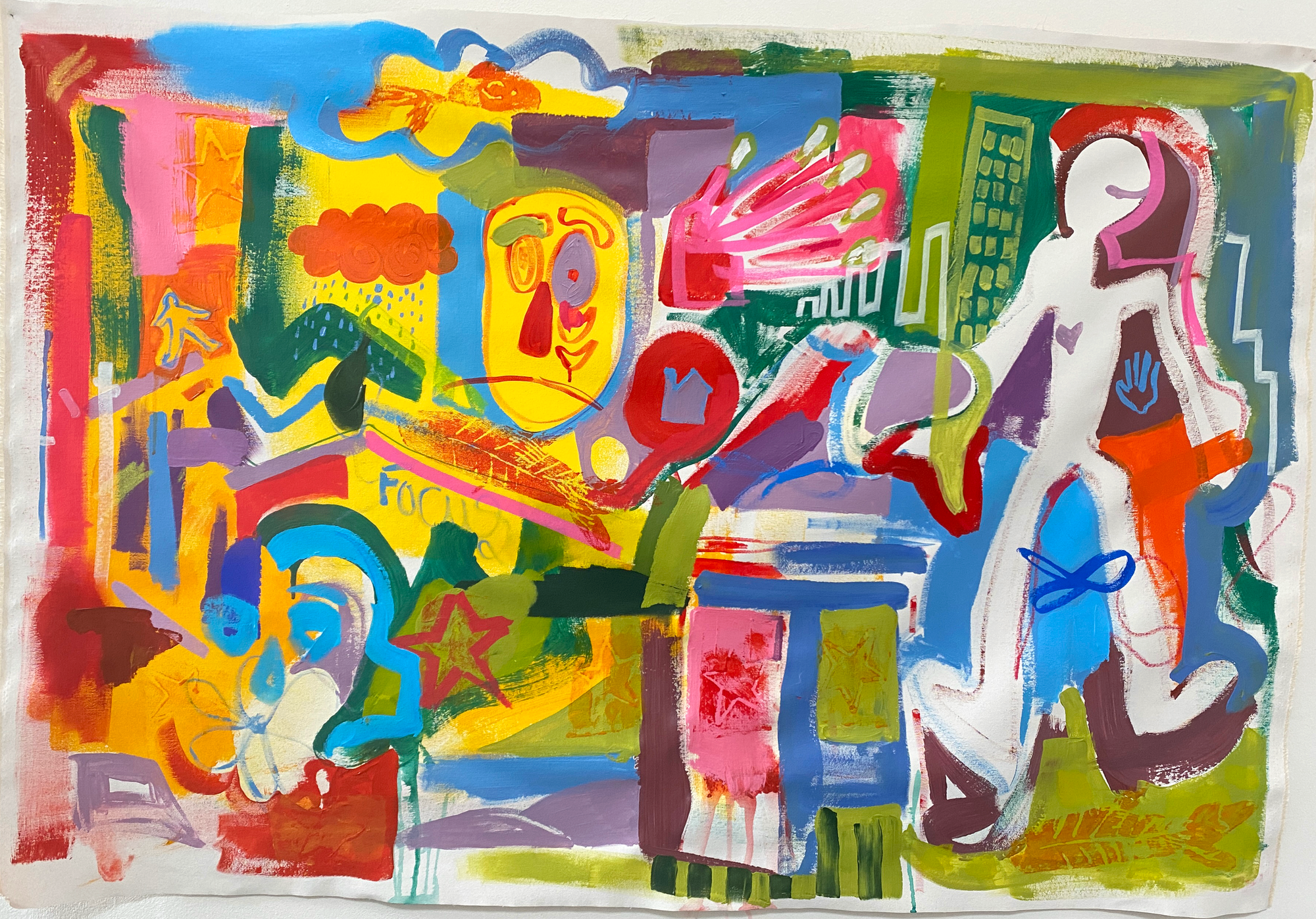
The Muslim I encounter, especially in parts of contemporary American political discourse, is someone I don’t recognise. I keep tripping over this disconnect. I grew up in Bangladesh surrounded by books, not fear. My family, my teachers, my friends – they were all sorts of people, different faiths, different backgrounds, just living. But then I hear a version in politics that feels abstract and alien, permanently suspect, sometimes framed as dangerous. I look for that person in my memories, in my own life, in myself, and I don’t find them. That leaves a kind of quiet sadness. Not because I expect perfect understanding, but because the mismatch is so vast. I keep asking where that imagined figure comes from and why it has been given such power. After years of living here, building a life, watching my children grow up here, it feels like belonging and exclusion occupying the same space. I don’t have a tidy answer. Just the sense that the Muslim I know is missing from the story being told, while another Muslim, imagined from the outside, has taken their place.
And that imagined Muslim is no longer confined to the political margins. It now appears openly in the language of elected office. US Congresswoman Nancy Mace offered a stark example during Abdul El-Sayed’s Democratic primary campaign in Michigan, casting Muslims in public office as a “Trojan horse” and warning that they would one day force “our daughters to wear burqas”. Then, within hours of El-Sayed’s primary victory, Trump followed suit, quickly using his full legal name: Abdulrahman Mohamed El-Sayed, while painting him as a threat to the nation. Together, these moments laid bare a deeply entrenched Islamophobia that currently permeates America’s body politic, where a name becomes a warning, and a faith becomes a disqualification.
I can read these things professionally. I can reach for familiar concepts: racialisation, securitisation, Christian nationalism, nativism.
Sometimes the concepts help.
Sometimes they don’t.
Because this story has been unfolding for twenty-five years.
September 11 did not invent American Islamophobia. But 9/11 changed its political possibilities. Muslims became extraordinarily visible in American public life, often through one particular question: security.
The War on Terror followed. Afghanistan, Iraq, Guantánamo, surveillance, extraordinary rendition, enhanced interrogation techniques. A vast political and institutional apparatus developed around the possibility of Muslim danger.
Donald Trump didn’t create this history either. But when he entered presidential politics calling for a “total and complete shutdown of Muslims entering the United States”, something previously expressed through the more bureaucratic vocabulary of counter-terrorism could be spoken much more plainly.
Mahmood Mamdani, a prominent anti-colonialist scholar, saw part of the problem early. His distinction between the “good Muslim” and the “bad Muslim” captured an uncomfortable demand created after 9/11. The acceptable Muslim must continually demonstrate distance from the unacceptable one. Condemn this attack. Explain that organisation. Prove your moderation. Reassure us about your loyalty.
The question quietly changes.
Not: what do you believe?
But: can we trust you?
Sahar Aziz’s idea of the “racial Muslim” takes us further. Islamophobia does not actually require much knowledge of Islam. A name may be enough. An ancestry, an appearance, a political position. People perceived as Muslim can be gathered into a racialised political category and assigned characteristics that have remarkably little to do with their individual lives.
Then comes the part I find most worrying: securitisation.
There is an important difference between prejudice and securitisation. Prejudice says: I don’t like you.
Securitisation says: you may be a threat to us. The Copenhagen School’s securitisation theory reminds us that security begins as a speech act. Once governments or lawmakers frame an issue as an existential threat, the political consequences can become much more serious. Surveillance can be described as protection. Exclusion becomes precaution. Suspicion begins to sound like responsibility.
History gives us reasons to be cautious here. During the Second World War, more than 120,000 people of Japanese ancestry were incarcerated in the United States, most of them American citizens. Their experience is not equivalent to that of Muslim Americans today, and making a direct comparison would obscure more than it explains.
But the political mechanism should make us uncomfortable.
A population becomes associated with danger. Individual citizenship begins to matter less than collective identity. Exceptional treatment becomes easier to defend because the exception has already been catalogued as a security necessity.
That history sits uneasily beside some of the rhetoric we now hear about Muslim participation in American politics.
After 9/11, the recurring question was whether Muslims constituted a security threat. During Trump’s first campaign, another question became explicit: should Muslims be allowed into America?
Now we occasionally hear something different.
Should Muslims be allowed to govern America?
That question reaches somewhere deeper than immigration policy. It touches citizenship itself.
Article VI of the US Constitution says that “no religious Test” shall be required for public office. The wording sounds clear. Yet constitutions cannot prevent societies from creating informal tests of belonging.
You can be a citizen.
You can stand for election. You can win.
And still your Muslim identity can be presented as evidence that you should not be there.
Professional instinct tells me to analyse what I am reading.
Look at the evidence.
Return to Edward Said, Fanon, Mamdani, Aziz.
Think about institutions rather than personalities.
But there are mornings when another headline about Muslims being dangerous or disloyal lands differently. I think about my family, friends and students. And, oddly perhaps, I find myself thinking about those classrooms in Bangladesh. Hindu, Buddhist and Muslim teachers. Friends from different backgrounds. None of us thought of difference as a reason to doubt whether someone belonged.
There is a human cost here that political science can make strangely bloodless. Research on anti-Muslim discrimination, alongside my own lived experiences in the post-9/11 Western world, increasingly points to psychological distress, anxiety and poorer mental health. Being repeatedly told that people associated with your identity are dangerous, foreign or conditionally accepted does something to a person.
At times, I experience the language almost as a form of violence. I use that word carefully. A hateful statement is not physical violence. But words spoken by people with political power are not weightless either. They can tell millions of citizens that their membership of the nation remains open to negotiation.
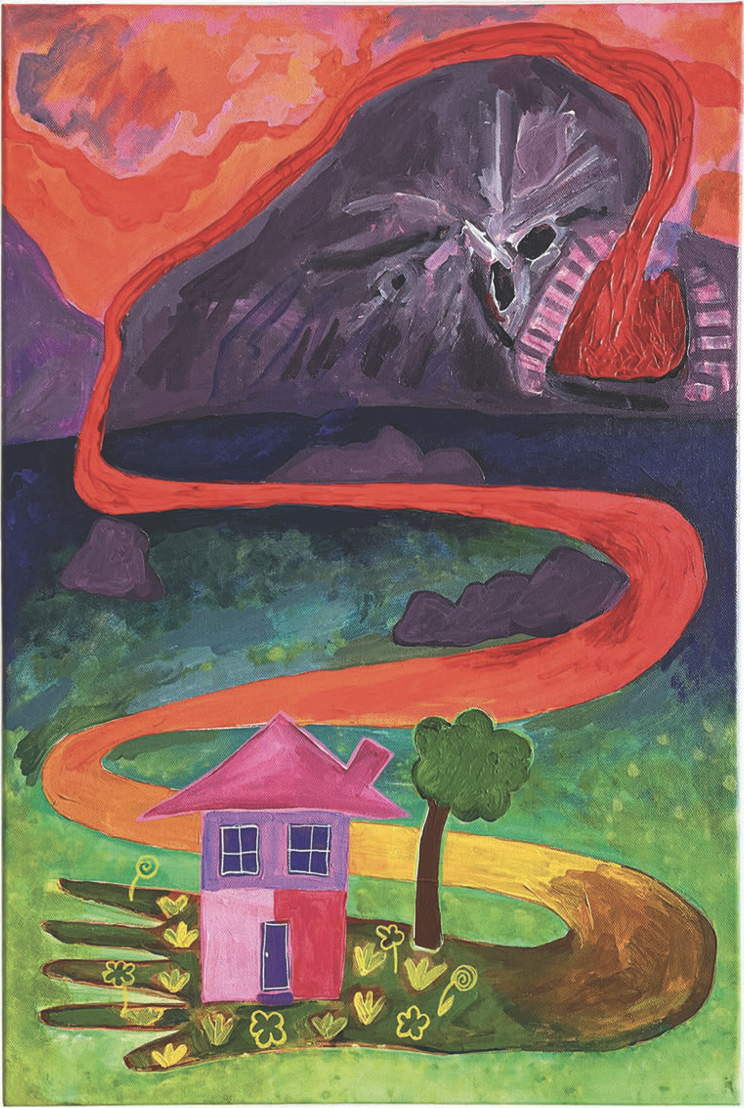
Which brings me, finally, to nation-building.
Muslim Americans are not standing outside America asking to become part of it. They are already building it. They teach in its schools and universities, run businesses, practise medicine, serve in its armed forces, raise families, vote, organise, disagree with one another and increasingly stand for political office.
That last part matters.
Perhaps some of the hostility towards Muslim politicians tells us not only that Islamophobia persists, but that something has changed. Muslims are no longer simply people about whom American politics speaks. They are acquiring the capacity to speak, legislate and exercise political power themselves.
And this is where securitisation and nation-building collide.
Securitisation asks a country to look at millions of people and imagine the possibility of danger.
Nation-building asks something quite different: what can these citizens contribute to the country we share?
A democracy cannot indefinitely ask people to build the nation while treating them as permanently suspect within it.
Twenty-five years after 9/11, I have plenty of academic terminology for what I am watching. Fanon helps me understand what happens when people are defined by somebody else’s categories. Said helps explain how an imagined East becomes threatening to an imagined West. Mamdani shows how Muslims become sorted into acceptable and dangerous ones. Aziz helps us see what happens when that distinction becomes embedded in the institutions and language of security.
They help. But before I am a political scientist trying to understand all this, I am still that child who grew up in Bangladesh among those books, teachers and friends. Perhaps that is why I struggle with the idea that millions of people can be reduced to a question of security.
Perhaps that is the question beneath all the others.
Not whether Americans must agree with Islam. Not whether Muslim politicians should escape criticism. Of course, they shouldn’t. Democracy requires argument, disagreement and scrutiny.
The question is whether millions of citizens can disagree, participate, stand for election, exercise power and still belong without their religious background becoming evidence against them.
Because once a democracy accepts that one group of its citizens can be made into a permanent security question, something larger has changed.
It has begun changing what citizenship means.
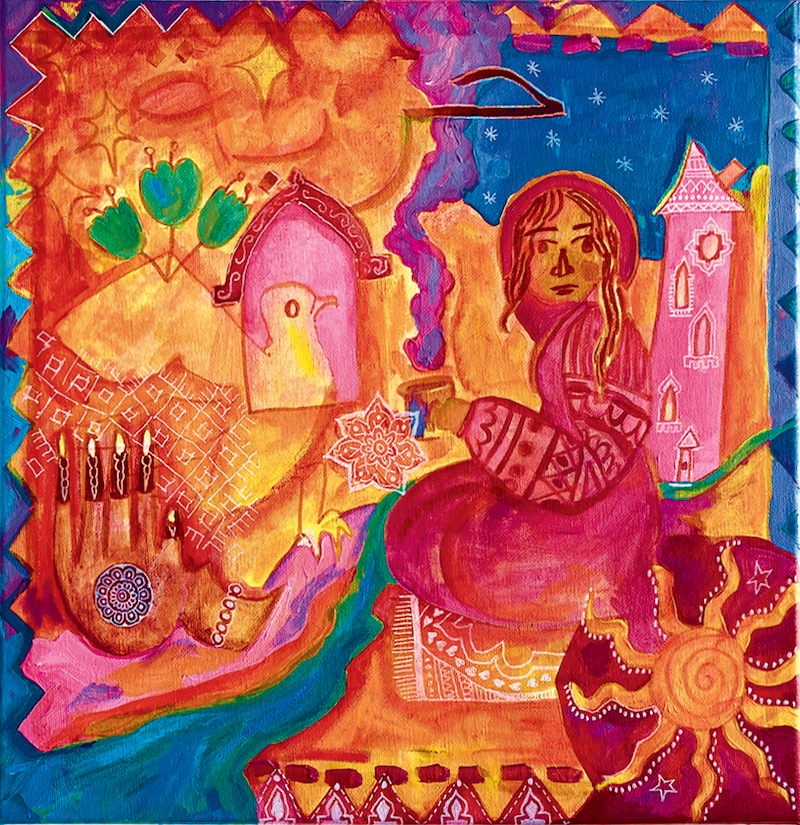
Artworks by Maha Shami ~ mahashami.com ~ @mahart23