It is indeed my opinion now that evil is never 'radical,' that it is only extreme, and that it possesses neither depth nor any demonic dimension. It can overgrow and lay waste the whole world precisely because it spreads like a fungus on the surface. It is 'thought-defying,' as I said, because thought tries to reach some depth, to go to the roots, and the moment it concerns itself with evil, it is frustrated because there is nothing. That is its 'banality.' Only the good has depth that can be radical.
Hannah Arendt to Gershom Scholem, 24 July 1963 [1]
Strictly speaking, this is not a book review. Rather, it is a series of reflections prompted by recent writings on the Holocaust, anti-Semitism, Gaza, and genocide. I am interested in how these terms shape our understanding of history, memory, and responsibility in today’s political landscape. My main concern is the trivialization of the Holocaust for reasons of state (Staatsräson) by Israel, Germany, and the West in general, accompanied by the banalization of anti-Semitism itself. Both, I would argue, denote an inability to grapple with how deeply these histories are interwoven in the construction of Western modernity. What follows is not merely a reflection on the sense of Western guilt for the Shoah. Rather, it seeks to conceptualize a critical responsibility. Guilt traps us in melancholy; responsibility consists in keeping the question open to work with the trauma.[2]
Confronting the stratifications of historical processes and the sedimentation of memory – both of which are often erased or simply reshaped to suit today’s agendas – is a complex task. Perhaps nowhere else in the contemporary world are such issues brought into such sharp focus as in the history of the State of Israel and the Holocaust. Generally fused into a composite image of modern Jewish identity, this narrative, in which a terrifying history of mass extermination seems to justify whatever the State of Israel decides to carry out – including genocide – obscures deeper complexities.
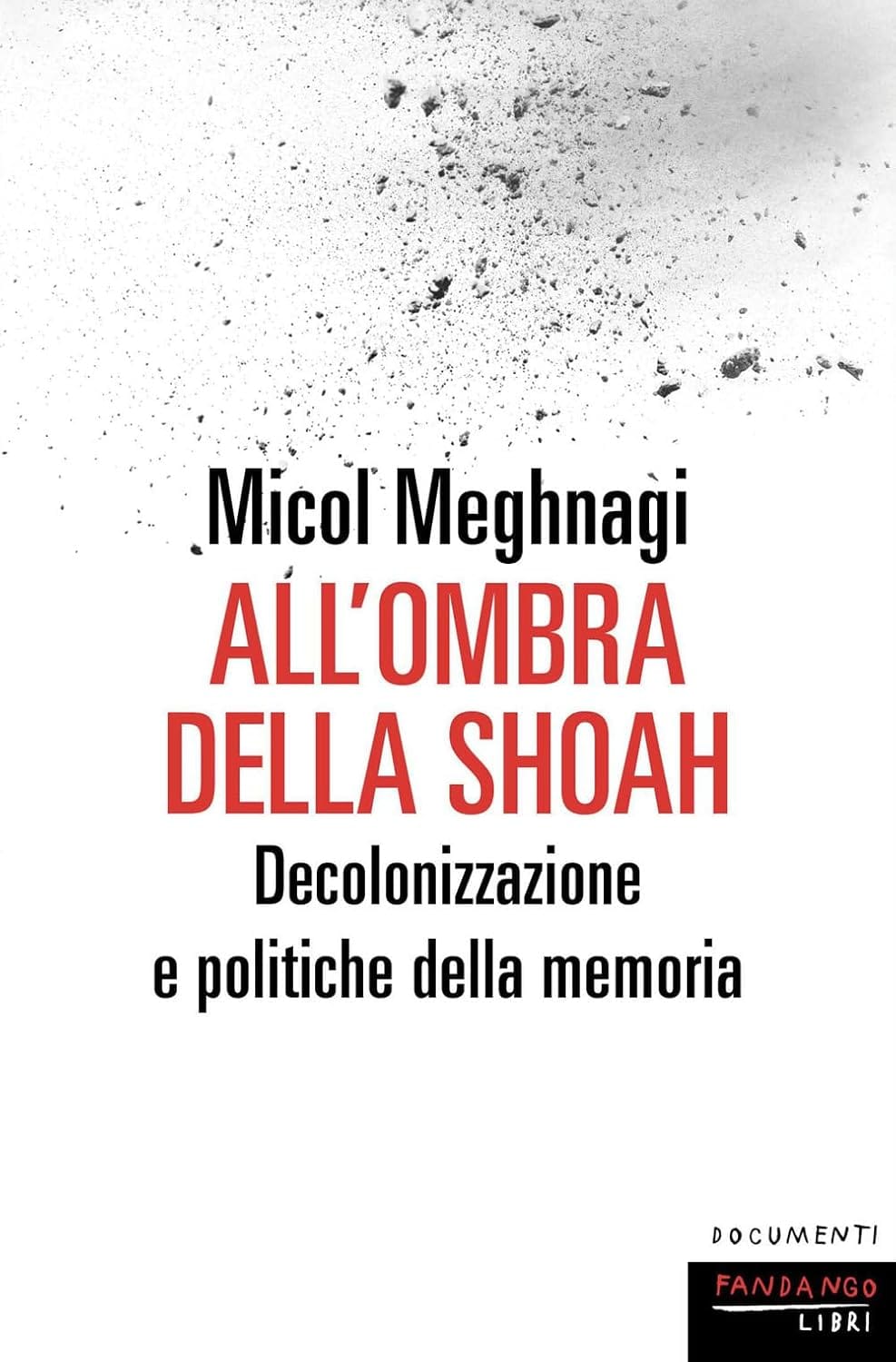
In a carefully calibrated analysis attentive to historical detail and political debate, integrating an extensive field of scholarship with admirable critical acumen and autobiographical urgency, In the Shadow of the Holocaust: Decolonization and the Politics of Memory by Micol Meghnagi breaks through the paralyzing rhetoric that seeks to control the present and stifle any discussion of the intertwining of Israel, anti-Semitism, racism, and genocide.[3] By drawing connections that are institutionally discouraged and increasingly denied, we are presented with a diverse vision of our space-time. Faced with the rubble of history and the ruins of the past, it is language, as Hannah Arendt emphasized, that remains. And at this moment, our language is under occupation.
Let us consider history as the act of engaging with the past that flares up in a moment of danger, as Walter Benjamin famously put it. More prosaically, this means recognizing the past’s critical relevance to our understanding of the present. In this interweaving, we are both Palestine and Israel. There is therefore no such thing as scientific neutrality. No law, nor any critical distance. This does not mean there is no knowledge. Rather, the past continues to raise issues that remain unresolved. These challenges us and invite us to undertake genealogical analyses that render them intelligible. This is what Michel de Certeau termed the ‘historiographical operation’.[4] Despite claims to scientific rigor and an empiricist foundation, this is historiography; that is, the practice of writing that becomes the factor of truth. Documents, facts, and events do not exist outside the languages that identify and construct them. What they ‘say’, the way in which they are recognized and preserved in an archive, is irreducibly contemporary. If the past speaks, it speaks through us. As James Baldwin rightly put it: ‘History is not the past. It is the present. We carry our history with us. We are our history. If we pretend otherwise, we are literally criminals.’[5]
The West’s direct involvement in the extermination of Europe’s Jewish population in the 20th century — from Riga to Rome, from Paris to Prague — has, to use Meghnagi’s term, been ‘anesthetized’. Extending the diagnosis, we can consider the central role the British state, through its empire and foreign policy, played in the violent creation of the Palestinian question, and its stubborn refusal to acknowledge that role. Repression is not accountability. Instead, Europe has sought redemption through unconditional support for Israel, the so-called outpost of Western democracy in the Middle East — upholding it as an essential partner in the West’s increasingly virulent discourse against ‘the Rest’. This is, after all, the Holy Land. The fact that Jesus was not white but Jewish and Palestinian did nothing to dampen the fervor of Victorian Christians, nor that of their modern heirs in Christian Zionism, nor that of the many defenders of Western ‘values’.
Having apparently absolved itself of its terrible past, Europe can turn its back on it. Capital and geopolitics, organized around continuous colonial warfare and regimes of capitalist accumulation, mask the obscenity of their moral economy. By transforming the Holocaust into a monument to absolute evil, as has materialized over the last thirty years – through museums, commemorations, and the refusal to consider its unsettling relevance to the construction of the present – the past is reduced to a tomb. In this way, memory is defused to ensure a single national narrative, both for Israel and for the West. Thus, the Shoah, rather than posing unsettling questions that engage all those involved, becomes the permanent shadow of Auschwitz.[6] Symbolic capital is then expended solely to protect the victims taken into the care of the Zionist state, thereby stifling questions that might help free ourselves from the colonial aphasia of the current condition. Contemporary discussion is replaced by the stunned silence of a past horror. There is no debate; the past has become absolute. Yet, as Primo Levi warned, it can always happen again. Raphael Lemkin, the Jewish lawyer who drafted the Convention on the Prevention and the Punishment of the Crime of Genocide (1948), insisted that the term he coined should be applicable retroactively. He had in mind other histories as well as the one for which the term ‘genocide’ is today overwhelmingly reserved. This invites us to consider that specificities should not be mistaken for uniqueness. Lemkin proposed the genealogy of genocide as an integral part of the history of modernity and the West.
In opposition to the impulse to control memory and police identity, Micol Meghnagi asks us to ‘de-provincialize’ this approach and to decolonize our language. This is why the categories themselves must be subjected to critical scrutiny. ‘Jews’, like ‘Arabs’, ‘Muslims’, and — I would add — ‘Black people’, are invariably reduced to homogeneous, subordinate objects of political interest and historical marginalization. This is the language of a racial economy. It goes beyond the so-called ‘Jewish question’ and anti-Semitism, extending to the racialized power relations that structure the modern world. Anti-Semitism and the history of the Holocaust are specific and central elements in the West’s self-definition as white and Christian — but, as Zygmunt Bauman argued, they also cast a dark light on the very constitution of modernity and on the white subject’s claim to be its supposed mirror.[7] I realized this firsthand at the international art event Documenta 15 in Kassel in 2022, amid accusations of anti-Semitism flying from all sides: German-Jewish institutions were firmly determined to keep the issue of anti-Semitism — which, as elsewhere in German public life, had been reduced to anti-Zionism — strictly separate from the racism encountered by folks of colour. Yet the very concept of anti-Semitism, as the historian Mark Mazower points out, stems from a discredited racial theory, deeply intertwined with ideas of empire, nationalism, Christianity, and white Western domination.[8]
Once institutionalized and monumentalized, state-sponsored commemorations inevitably become rhetorical rituals that, rather than challenging the status quo, reaffirm it to the point of becoming part of the language of hegemony. Preserving the past this way deprives memory of its critical value and reduces history to the inevitability of the present. Rather than being a place of remembrance, it becomes a hollowed-out space, marked by structural oblivion and forgetfulness. In the emptiness, it leaves room for the compulsion to repeat discrimination, racism, colonialism, and genocide. Here, in the echo chambers of power and prejudice, anti-Semitism and Islamophobia are bound to thrive.
Portrayed as a terrorist rather than as an indigenous person resisting colonialism, the Palestinian exists in this discourse solely to confirm the legitimacy of the Zionist state and the threat Islam poses to the West. Within the framework of public atonement for the Holocaust, the West’s centuries-old crusade against the Arab world and Islam has now adopted the Zionist cause as a shield for itself, while simultaneously perpetuating the pernicious notion that Israel speaks on behalf of all Jews. Under this framework, any criticism of Israel is inherently anti-Semitic and, given the intertwining of these issues, ultimately anti-Western. Public discourse silently withdraws its responsibilities to both Jews and Arabs and shifts the blame and moral burden of centuries of anti-Semitism — culminating in the industrialized extermination camps of Eastern Europe — onto Palestinians via unconditional support for Israel’s ongoing colonial violence. The reason Palestinians must bear this burden, beyond the messianic appeals to the mythical ‘right of return’, is never explained.
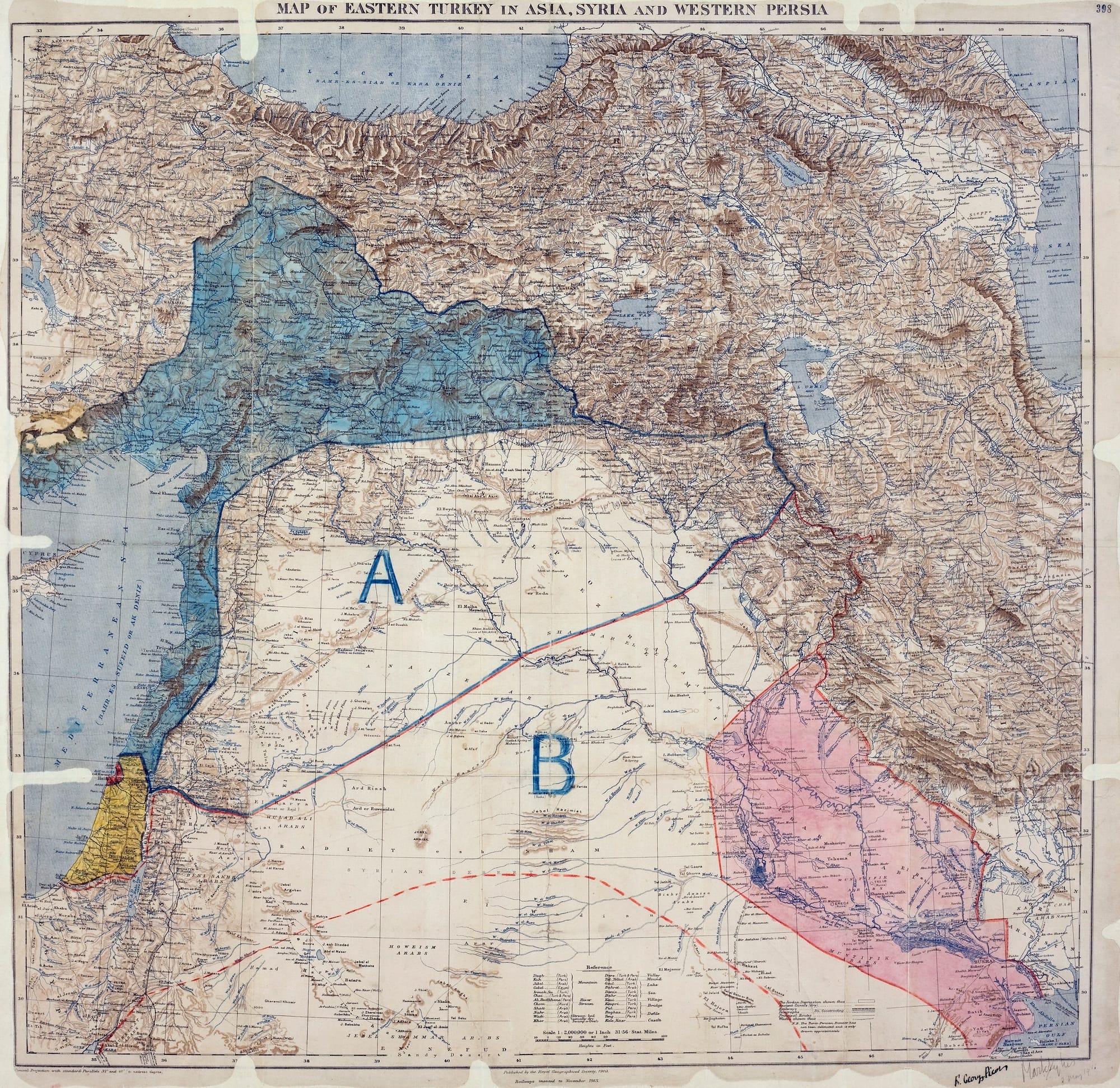
In more prosaic terms, viewing the world as one’s own colonial possession has always justified such ‘solutions’, in this case, paradoxically, orchestrated by anti-Semitism. Almost all members of the British government who approved the 1917 letter, promising European Zionist Jews a homeland in the former Ottoman province of Palestine, were openly anti-Semitic. In Lord Balfour’s case, this was explicit. It was the same government that, in those years, had promised an Arab kingdom stretching from Baghdad to the Mediterranean, from Mecca to Damascus, in exchange for the ‘Revolt in the Desert’ (Lawrence of Arabia and the treacherous British promises buried in the sand) against the Ottomans, then allies of Germany. Whilst the Zionists may have been inferior to members of Her Majesty’s Government, insofar as they were Europeans, they were certainly superior to the Arabs and could be regarded as a bulwark of Western ‘civilization’ (and of British interests) in the East. As the historian Mark Mazower points out, the current German federal government’s fervent defense of Israel precisely echoes the underlying anti-Semitic sentiment that the Zionist state is, in fact, the place where Jews really ought to ‘belong’.
If identity is the product of these complex and open-ended processes, it has very little to do with endorsement of the nation’s linear and homogeneous narrative. Rather than an uncontaminated formation, unaffected by otherness and the ‘outside’ world, we are faced – despite the careful control of memory and the monitoring of stories – with a more complex and unfinished business. In this context, Micol Meghnagi, by inviting us to re-examine the Holocaust, memory, and the complex constellation of ‘Jewishness’, leads us into another history of modernity. Through careful analysis of anti-Semitism, the Holocaust, and colonialism, and by listening to the many voices of both victims and perpetrators, these concepts are freed from mere political manipulation or the status of concluded issues. Layered and multidirectional, as Michael Rothberg emphasizes, they are also unconscious and inevitably truncated, as language proves inadequate in the face of the horror and ruins of the historical past.[9] At this point, faced with Walter Benjamin’s angel of history and driven backward into the future by the winds of progress, we are transported toward other, unauthorized narratives of the present.[10]
And it is precisely these memories – of both Jews and Palestinians – that, in the current context, overflow the rigid confines of the modern nation-state, its predictable textbooks, its restrictive legal frameworks, and, ultimately, its militarized regimes. For memory clings to other forms of affiliation with the land, language, beliefs, and life. Rather than being confined to an identity card or a passport, memory sustains further archipelagos of belonging – local and immediate – that, at the same time, reach out toward the wider world. Recognizing that history, coming from the other side, from below, and from the supposed margins of the official narrative, means acknowledging a history yet to come. It is in this context that the unexpected alliance between radical Jewish thought and many strands of contemporary Palestinian thinking lies, and that it is now articulated in the critique and rejection of the nation-state as the locus of political and historical belonging. This is not a romantic speculation about nomadic Bedouins in the desert or the ‘wandering Jew’ who renounces the modern state, but rather a matter of acknowledging and engaging with the idea of a political community capable of embracing a more open and complex conception of being at home in the world. Both, emerging from very different histories and contexts, are engaged in the struggle for a representation that is not confined to the punitive limits of the modern nation-state.
What might this mean in practical terms? Insisting that what we call identity is neither homogeneous nor uniform already means breaking out of the conceptual cage. It forces us to enter another territory. By insisting that no form of racism is clearly separate from another, we come to understand that we are not referring to an individual pathology but to a socialized power structure that has justified antisemitism, slavery, colonialism, genocide, and the moral claims of Western superiority. Orientalism, which is in reality another name for racism, is clearly still very much part of the colonial present. Here, repeating Arendt’s famous maxim and asking who has the right to have rights – clearly not the Palestinians at present – also leads us to grapple with the colonization of concepts such as rights, democracy, and justice. Terms that we are accustomed to regarding as essentially our own, to be defined, applied, and revoked according to our own interests and perspectives.
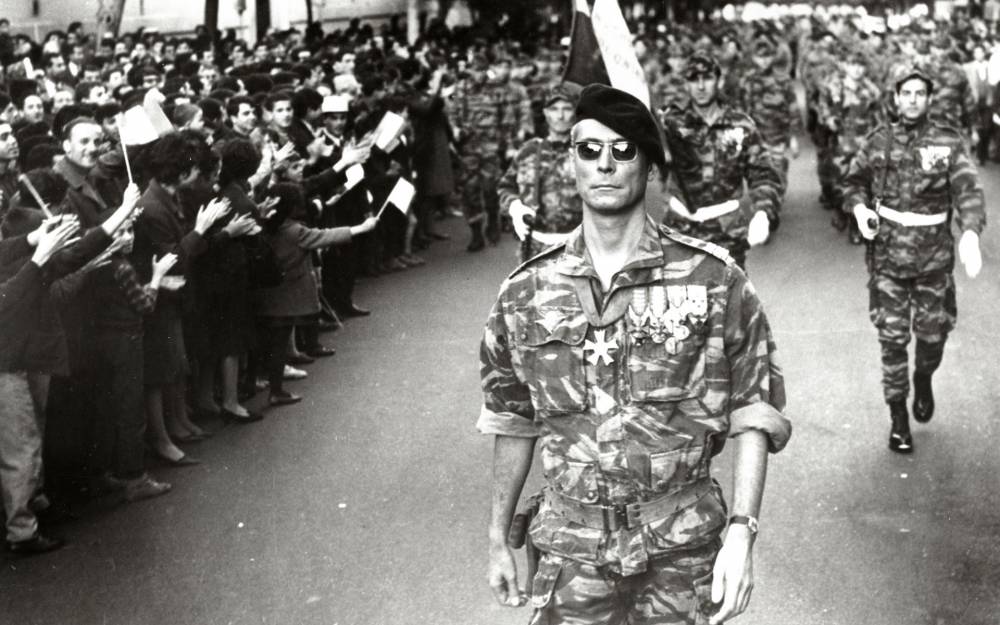
2026 marks the sixtieth anniversary of the film The Battle of Algiers. No one is celebrating it or even talking about it. The silence surrounding a film that explores colonialism, state violence, and terrorism with such insight speaks volumes. Are the Algerian women who carry bombs into the European neighborhoods of Algiers resistance fighters or terrorists? They are inextricably involved in a struggle for national liberation against the French occupiers. Within the asymmetrical power relations that constitute the colonial matrix, violence is not accidental but essential to its order: from the Algerian War of Independence to Gaza and the West Bank today. Pontecorvo’s film also speaks of the Mediterranean and of us, right at this very moment.
The Holocaust’s emergence as a central element of Israel’s (and Europe’s) identity is a recent phenomenon. Initially, it was not integral to the founding of the Jewish state in 1948 (nor was Judaism as a religious doctrine). That year, marked by the forced expulsion of some 800,000 Palestinians in the Nakba, was rather the culmination of the intertwining of European ideologies of nationalism, racism, and colonialism – dating back to the 19th century – in which being modern required a nation-state, a homogeneous identity, and the colonial project of civilizing the rest of the world. The Holocaust’s symbolic centrality, linked to anti-Semitism, is even more recent, symptomatic of increasingly aggressive political interpretations and cultural configurations in the permissible construction of memory and identity: for both Jews and non-Jews. As Micol Meghnagi argues, it began to gain prominence in the national narrative with the judicial spectacle of Eichmann’s trial, held in Jerusalem in 1961. Hannah Arendt emphasized at the time that, for a crime committed in Europe against Europeans, Eichmann should have been tried, convicted, and executed in Europe, not in the eastern Mediterranean.[11] The transition from Judaism to Zionism – from a sense of Jewish belonging in the world to a national identity under the auspices of Israel – was underway.
In the years immediately after the Second World War, European survivors of the Holocaust, such as Primo Levi and Jean Améry, saw Israel as a necessary refuge from persecution. The fact that the Zionist state subsequently became an ethnocratic project stretching from the Mediterranean to Western Asia reveals a deeper history — one in which the European genocide, the Holocaust, is, in effect, held hostage by the state’s subsequent construction. As in any process of nation-building, a narrative is constructed, and myths are invented. The resulting ideological bricolage is flexible enough to underpin the discursive regime it serves. Today, Israel’s imperious ethno-nationalist zeal stands in stark contrast to the more calculated nationalism of its early days. Yet there are also continuities. Modern colonialism and the biblical reference to a predestined ‘return’ do not cancel each other out. Their significance shifts over time and according to circumstances, thereby renewing power and hegemony.
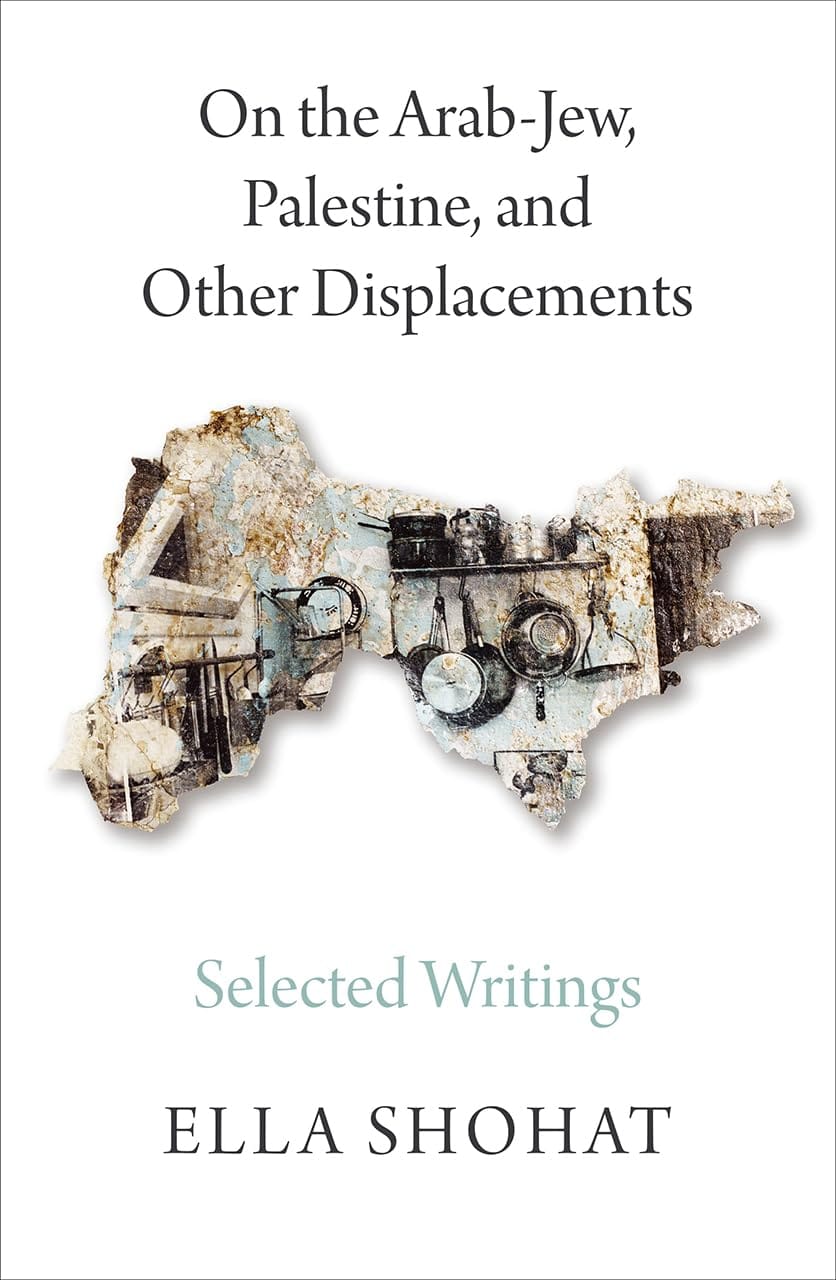
Even the socialist collectivism of the kibbutz movement was reserved exclusively for Jews. As Ella Shohat has explained, the indigenous population had no place in a pioneering appropriation of the territory, based on treating it as terra nullius.[12] In the same manner, the colonists of the Americas, the Antipodes, and temperate Africa had treated the land they had appropriated. The oldest Jewish communities in the Arabic-speaking world, from Rabat to Baghdad, were integrated into the project as junior partners to be educated and reformed by their modern European cousins. As ever, assimilation — whether of Sephardic, Arab, or Mizrahi Jews — required the erasure of a pre-existing cultural heritage in order to become part of a community defined by European notions of the state and identity. Such concepts have subsequently also forcibly reshaped the Arab world. All of this was also a form of ethnic cleansing.
Survivors and witnesses of the Holocaust have spoken of the impossibility of conveying this black hole in history, yet they also have insisted that we must never stop talking about it. Rather than the comforting reassurance of a temporary aberration, this heart of darkness is integral to the formation of the West and its contemporary configuration.
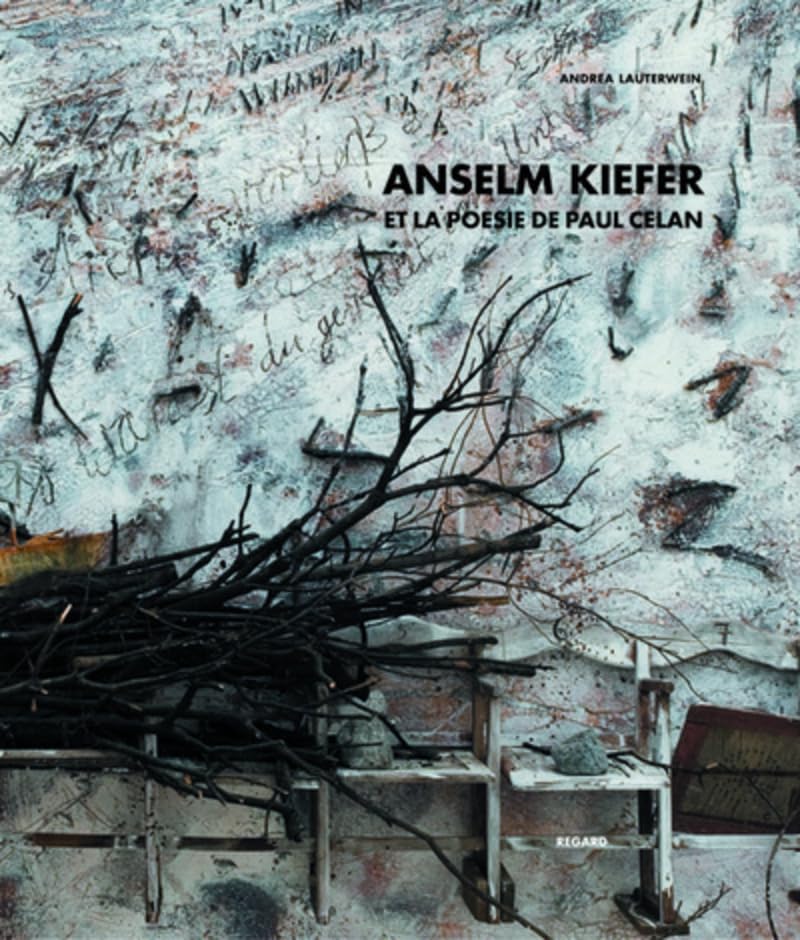
The work of the German artist Anselm Kiefer, with its imposing scorched landscapes and hollowed-out, ruined, and decaying monuments, and his series of paintings ‘Margarete-Sulamith’, inspired by Paul Celan’s poem ‘Todesfuge’, can be experienced as a somber and enduring meditation on the Holocaust.[13] To stare into the abyss, so that, as Nietzsche suggested, it stares back into us, is to acknowledge a laceration, an open wound that cannot simply be stitched up or quickly healed. As Primo Levi repeatedly emphasized, it is not a matter of seeking revenge, reparation, or redemption, but of understanding. Pursuing this process, which is always incomplete, leads us, through the Shoah, to reflect on the conditions that gave rise to it. Colonialism is not merely a faded chapter in the West’s historical chronology, nor are racism and anti-Semitism merely painful memories to be banished and consigned to the past. This calls for an entirely different history of the West, one in which the deliberate extermination of peoples and rights is constitutive – rather than peripheral or secondary – to the formation of the present. Challenging the institutional veil that seeks to conceal this past behind empty rituals of mourning leads us into an entirely different, less secure space. It is a critical journey through jagged memories, painful archives, and a confrontation with the paralyzing predictability of everyday evil, so brilliantly evoked in Jonathan Glazer’s film The Zone of Interest (2023). Here, the questions insist on their right to remain, even if we are unable to provide an answer. History refuses to pass.
At this point, rather than clinging to the liberal belief in the linearity of progress — and Jürgen Habermas’ proposal that the West is still an incomplete project — it might be more honest to adopt the humility that acknowledges Frantz Fanon’s verdict: the project is in ruins and should be abandoned. We need new coordinates, defined by questions of historical justice and solidarity, based on a coexistence that is not automatically authorized by the West. This suggests that we should tear up the current maps. Echoing Primo Levi, Enzo Traverso argues that we can no longer blindly accept the memory of the Shoah, which turns in on itself to protect Israel’s ‘ontological innocence’.[14] Recently, Nancy Fraser has stated this forcefully: Gaza has become a world event and can no longer wait.[15]
[1] Hannah Arendt, "The Eichmann Controversy: A Letter to Gershom Scholem" (24 July 1963), in The Jew as Pariah: Jewish Identity and Politics in the Modern Age, ed. Ron H. Feldman (New York: Grove Press, 1978), p. 251.
[2]Paul Gilroy, After Empire: Melancholia or Convivial Culture? Routledge, London, 2004.
[3]Micol Meghnagi, All’Ombra della Shoah. Decolonizzazione e politiche della memoria, Rome, Fandango Libri, 2026.
[4]Michel de Certeau, The Writing of History, Columbia University Press, New York,1988.
[5]James Baldwin, quoted in the Raoul Peck film/book I Am Not Your Negro (Vintage International, 2017). It comes from Baldwin’s unfinished manuscript “Remember This House”.
[6]Lavinia Marchetti, Fragments of a Genocide: Palestine, the Biopolitics of Israeli Settlement Colonialism, Milan, Marco Saya Edizioni, 2025.
[7]Zygmunt Bauman, Modernity and the Holocaust, Polity, Cambridge, 1991.
[8]Mark Mazower, On Antisemitism: A Word in History, Penguin, London, 2026.
[9]Michael Rothberg, Multidirectional Memory: Remembering the Holocaust in the Age of Decolonization, Stanford University Press, Stanford, 2009..
[10]Walter Benjamin, Theses on the Philosophy of History". Illuminations: essays and reflections, New York: Schocken Books, 2012.
[11]Hannah Arendt, Eichmann in Jerusalem: A Report on the Banality of Evil, Penguin, London, 2022.
[12]Ella Shohat, On the Arab-Jew, Palestine, and Other Displacements: Selected Writings of Ella Shohat, London, Pluto Press, 2017.
[13]Andrea Lauterwein, Anselm Kiefer/Paul Celan. Myth, Mourning and Memory, Thames & Hudson, London, 2007.
[14]Enzo Traverso, Gaza Faces History, Footnote Press, Chichester, 2024.
[15]Nancy Fraser, “Gaza as World Event”, NLR, 158, 2026.
Iain Chambers has been a Cultural, Postcolonial, and Mediterranean studies professor at the University of Naples. At the same university, he has served as the Director of the Centre for Postcolonial Studies and the director of the doctoral program on Cultural and Postcolonial Studies in the Anglophone world. Chambers' work focuses on interdisciplinary and intercultural studies of music and popular and metropolitan cultures. Recently, he has shifted his research towards postcolonial analyses of the modern Mediterranean. Chambers studied with Stuart Hall at the Centre for Contemporary Cultural Studies in Birmingham and has authored several books. Some of his notable works include "Urban Rhythms" (1985), "Migrancy, Culture, Identity" (1994), "Mediterranean Crossings: The Politics of an Interrupted Modernity" (2008), "Popular Culture: The Metropolitan Experience" (2016), "Postcolonial Interruptions, Unauthorised Modernities" (2017), "Location, Borders and Beyond: Thinking with Postcolonial Art" (2018), and La Questione Mediterranea (2019). He has also co-edited books such as The Postcolonial Question: Common Skies, Divided Horizons (1996) and Esercizi di Potere. Gramsci, Said e il postcoloniale (2006) with Lidia Curti.