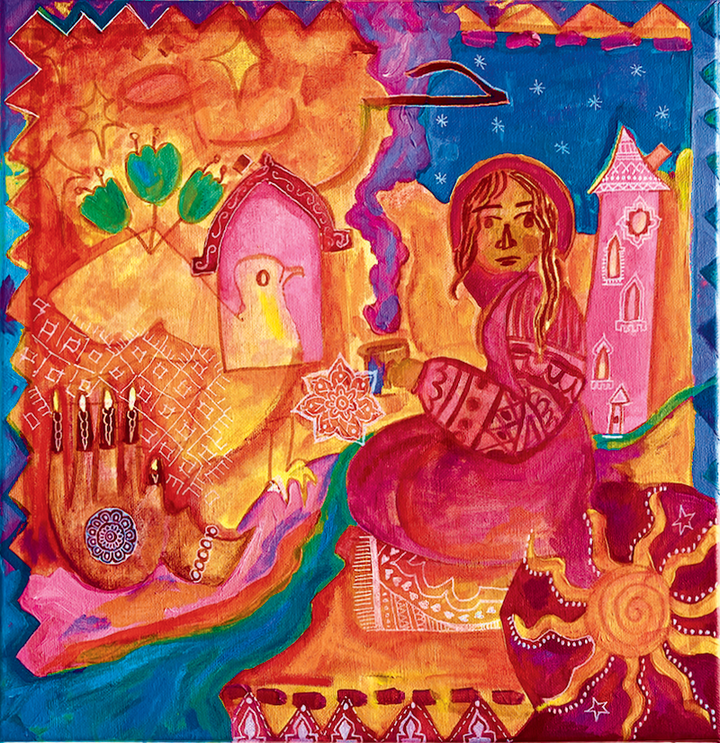
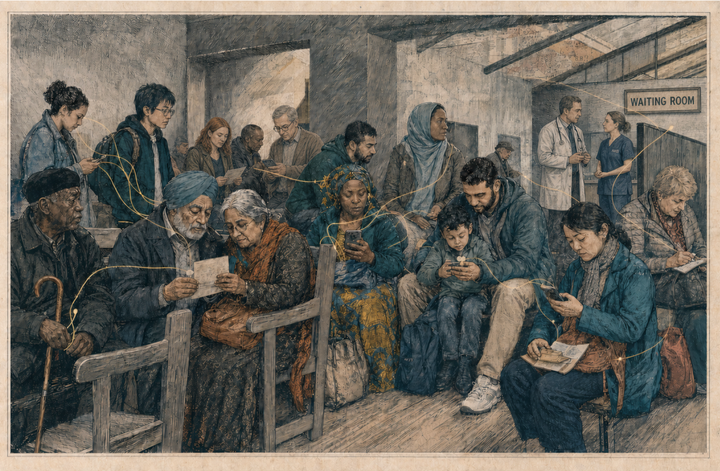
In Homer’s Odyssey (Book 12), we see Odysseus preparing to go through one of the most dangerous experiences of his entire trip. The experience involves being close to the sirens, creatures known for luring sailors into danger with their irresistible singing. As his ship approaches the Sirens, Odysseus does something unusual. He does not trust his own judgement. Instead, he orders his crew to bind him tightly to the mast and ignore whatever commands he might later give. He knows that once temptation takes hold, reason may disappear.
The wisdom of the episode lies in a simple idea: sometimes power requires restraint more than freedom.
After World War II, the founders of the United Nations came to a very similar realisation. Prior to WWII, leaders around the world felt free to use military power to reshape borders, impose political systems, and engage in warfare at whim. After seeing how devastating those actions were, the founders of the UN drafted the UN Charter. While the UN Charter is much more than a treaty agreement, it was also humanity’s best attempt to tie itself to the mast. This meant that no individual leader, no matter how influential, would have the right to unilaterally determine when diplomacy would end, and war would begin.
That principle feels increasingly fragile.
Donald Trump’s approach towards Iran is not simply another episode in the long history of American intervention in the Middle East. It reflects a broader philosophy of international politics: military force is not the last resort after diplomacy has failed, but an instrument for improving diplomacy itself. Bomb first. Negotiate later. If the other side refuses to compromise, increase the pressure until it does.
Recent events suggest precisely this calculation. Following renewed American strikes on Iranian targets, Tehran has responded with calibrated retaliation. Its actions have largely mirrored American attacks rather than expanding the conflict indiscriminately. Desalination facilities have been struck in response to similar attacks inside Iran. Regional infrastructure has been targeted after Iranian infrastructure was bombed. The message appears clear. Tehran wishes to demonstrate that escalation remains proportional, while signalling that Washington, not Iran, is broadening the conflict. Whether one accepts Tehran’s justification is beside the point.
The larger concern lies elsewhere. Trump appears to believe that additional military pressure will eventually produce better diplomatic outcomes. Yet diplomacy depends upon something that bombs cannot create: credibility. Negotiations require confidence that agreements reached today will not be discarded tomorrow because one side believes another round of military action may produce a stronger bargaining position. If states conclude that diplomacy merely provides an interval before the next bombing campaign, diplomacy ceases to perform its political function. This is precisely the danger the writers of the UN Charter sought to prevent.
The Charter does not outlaw war because its authors believed humanity had suddenly become peaceful. Quite the opposite. They understood how easily governments convince themselves that another military intervention will be short, limited and decisive. They had lived through the collapse of that assumption in the 1930s and 1940s. The Charter therefore established an important constitutional principle for international society: force would be lawful only in self-defence against an armed attack or when authorised collectively through the Security Council.
The objective was never perfection. It was restraint. Critics often dismiss the Charter as naïve because wars have continued despite its existence. That criticism misunderstands its purpose. Constitutions do not eliminate crime. Courts do not eliminate injustice. Laws against murder do not prevent every killing. They establish standards against which power can be judged and limited. The UN Charter performs the same function internationally.
Trump’s foreign policy has challenged that idea. His willingness to disrupt diplomatic convention has occasionally produced opportunities that previous presidents were unwilling to pursue. With regard to his first term, there were examples where non-traditional forms of diplomacy provided access to areas that were previously inaccessible.
Yet there is a difference between breaking convention and abandoning restraint.
Unlike conventional diplomacy, unconventional diplomacy tends to focus more on short-term gains rather than long-term cooperation. Additionally, unconventional diplomacy tends to view violence and/or coercive action as the preferred method(s) of resolving disputes. However, conventional diplomacy is based upon principles of cooperation and mutual respect, rather than coercion or force. Because of these fundamental differences, using unconventional methods of diplomacy can undermine the ability of diplomats to establish meaningful relationships with counterparts and to build strong foundations of trust. These differences are not merely theoretical. They shape how states behave, how crises develop and, ultimately, who pays the price.
The consequences reach far beyond Washington and Tehran. The Gulf states face the prospect of attacks on critical infrastructure despite having sought to avoid another regional war. Instability in the Strait of Hormuz drives up global energy prices. Higher fuel costs will contribute to higher food prices in Europe, Asia and North America. The families of U.S. service members stationed throughout the Middle East will live in fear of retaliatory strikes. And millions of ordinary citizens living hundreds or even thousands of miles away from the Situation Room located inside the White House will bear the consequences of decisions made without their consent.
The ancient Greeks had a word, hubris, which referred to the prideful behaviour exhibited by leaders who feel that they are invincible and therefore immune from criticism or accountability. Greek tragedy repeatedly warned that such confidence rarely ended where its protagonists expected. The twentieth century reached much the same conclusion, although at immeasurably greater cost. Twice within a generation, the world watched governments persuade themselves that military superiority entitled them to determine the fate of others. The result was not security but catastrophe. That historical memory shaped the UN Charter. Its authors recognised that the greatest danger to international order was not merely aggressive states. It was the concentration of life-and-death decisions in the hands of leaders convinced that their judgement alone was sufficient. Institutions exist because individuals, however gifted or popular, are fallible. International law exists because no President or Prime Minister should have unlimited authority over decisions about going to war.
Odysseus survived because he realised that there existed a time during which he would be unable to trust himself. He requested his crewmen to restrain him from acting on his desire until reason resumed. The tragedy of our age is that many of its most powerful leaders no longer believe they need to be tied to the mast.
Dr. Abdullah Yusuf is a Senior Lecturer (Associate Professor) in Politics and International Relations at the University of Dundee, UK. He studied Public Policy and Diplomacy at The Australian National University in Canberra, Australia, and holds a PhD in International Relations from the University of Dundee. His research and scholarship interests include: International organizations (United Nations, League of Arab States, and African Union); Politics of the Middle East, including Palestine, Israel, and the Arab-Israeli conflict; Politics of humanitarian armed interventions; Peacekeeping and post-conflict peacebuilding; International law and refugee protection; Climate politics; Post-colonial Studies. For more details on my teaching, research, and scholarship profile, please visit: his research profile and bio.
Image by Meghdad Madadi for Tasnim News Agency, licensed under a Creative Commons Attribution 4.0 International License.