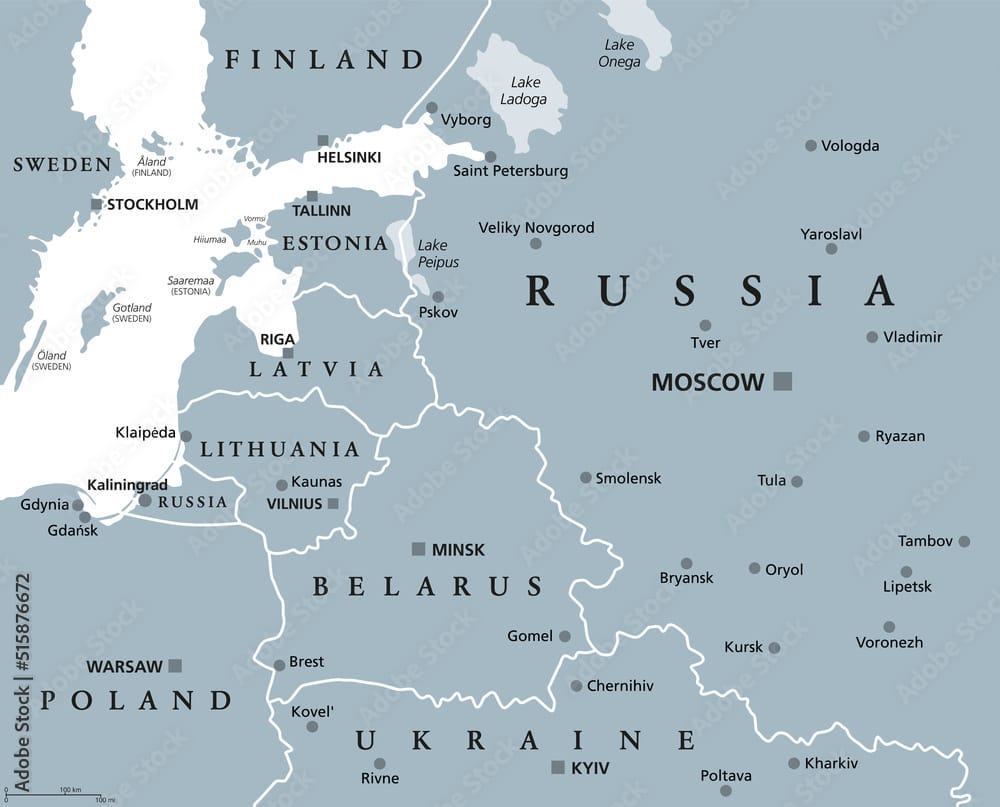
These are some of the notes and images from a talk recently given in Riga, the capital of one of the so-called front-line states in the increasingly aggressive Baltic and European posturing towards Russia. Of course, behind this minor moment lies the wider arrogance that, these days, passes for diplomacy. Kaja Kallas, former prime minister of Estonia (a country of 1.6 million, of whom 35% are Russian-speaking), and now responsible for EU foreign policy, informs us that we have to defeat Russia in order to better confront China!?! This scenario marks the latest stage in the uninterrupted expansion of NATO into the eastern steppes of Europe since 1989. It has left a trail of broken promises and rejected agreements. These days, long-range British missiles, accompanied by military logistical support, training and intelligence on the ground in Ukraine, are being launched deep into Russia. A proxy war, in which Britain is in the front line, is sliding towards a proximate war. Any Russian response will obviously be labelled aggression as we climb the escalation ladder against the world's number one nuclear power.
Drawing on sedimented cultures and stratified configurations from the Baltic archives, and setting them in play against wider historical and geographical coordinates, I tried to insist on the open composition of identity, or what I prefer to call belonging. This runs up against the barrier of simply creating a community by identifying Russia as the enemy. Uncomfortable and ambiguous histories, such as the welcoming of the Wehrmacht in Riga in 1941 and local participation in the rounding up and extermination of some 60,000 Latvian Jews, are not permitted to disturb the tale. As always, the narration of the nation is linear, homogeneous and edifying. Of course, historically and politically, this is complete nonsense. Publicly, it appears to rule, in the Baltic as in Britain, in Riga as much as in Rome.
No doubt, in Moscow, Minsk and Beijing, the counter-narrative is the same. Or is it? When the West insists it is the measure of the world, it is bound to miss what does not reflect its logic and concerns. Beyond our subjective fashioning of the planet as a historical and geopolitical object, other historical formations and lives evade our net (which is anyway full of holes). The illusion that the world can be rendered transparent to our reason comes at a cost. The longer we insist on this, the higher the price we will pay. Against the tide of institutional consensus, how do we think about the negated historical and cultural narratives that interrogate our political present: colonialism, migration and genocide? This has much to do with freeing ourselves from the closure of a single, homogeneous identity and with abandoning the parochial rhetoric of European governments and their increasingly virulent fascism. It is to insist on the open challenge of belonging to interleaved histories and cultural heterogeneities, where nothing is clear-cut, unambiguous or unchallengeable.
Thinking with Ajsa Lacis, from Latvia, who wrote the famous essay on Neapolitan porosity with Walter Benjamin on the island of Capri, suggests overarching connections across Europe:
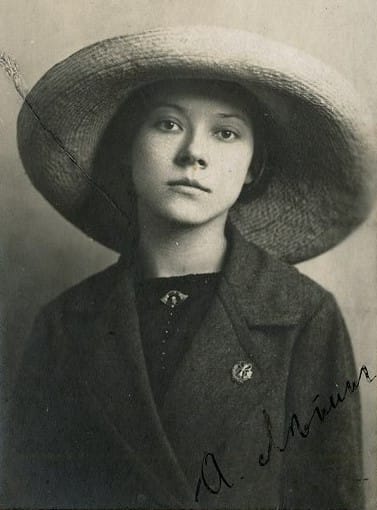
from the Baltic to the Mediterranean. Such folds in spacetime propose other tellings and horizons of sense. The past seeps into the present. This fluidity invites other responses to contemporary political urgencies, including both the general rigidification of identities and the more precise belligerencies of the ‘front-line’ Baltic states seeking conflict with their Russian neighbours.
For example, considering the premises of the colonial making of the Baltic states involves recognising the stratified powers of competing colonialisms emerging from the land-based extensions of powerful neighbours. If Russia and the Soviet Union were recently colonial entities, so, too, were the monastic Order of the Teutonic Knights, the Polish-Lithuanian Commonwealth, and the Swedish Empire under Charles XII. Russian expansionism itself certainly had deep roots in contesting both Teutonic and Mongolian power. The Catholic Church, which promoted the thirteenth-century Northern Crusades, purportedly to eradicate local paganism, impose Christianity, and contest the Orthodox Church to the east, was clearly also a colonising power.
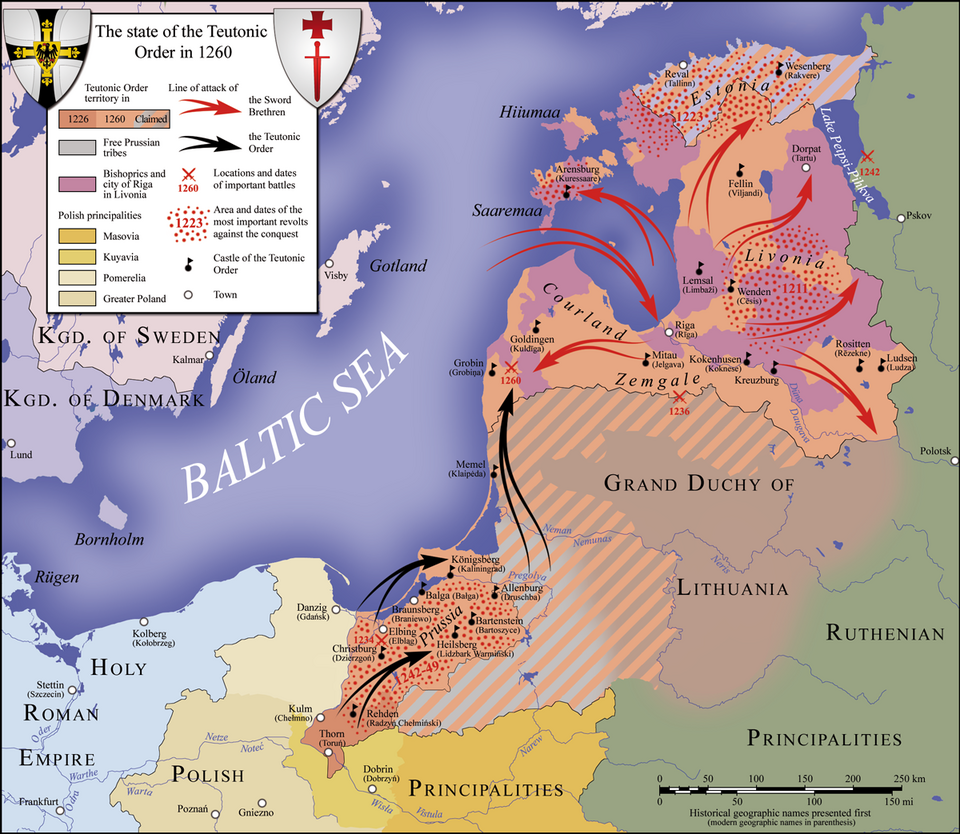
The insistence on historical sedimentation and stratification suggests something altogether more complex and, at the same time, more open. Vikings passed through the Baltic on their way to Byzantium. The Mongols almost arrived. At the Battle of Lake Peipus in the spring of 1242, the Order of the Teutonic Knights was defeated by Alexander Nevsky, who was immortalised in the 1938 film by Sergei Eisenstein. The victor was subsequently summoned to the Mongol capital at Karakorum, a round trip on horseback of some 12000 kilometres, to be invested as the Grand Prince of Novgorod and Kyiv.
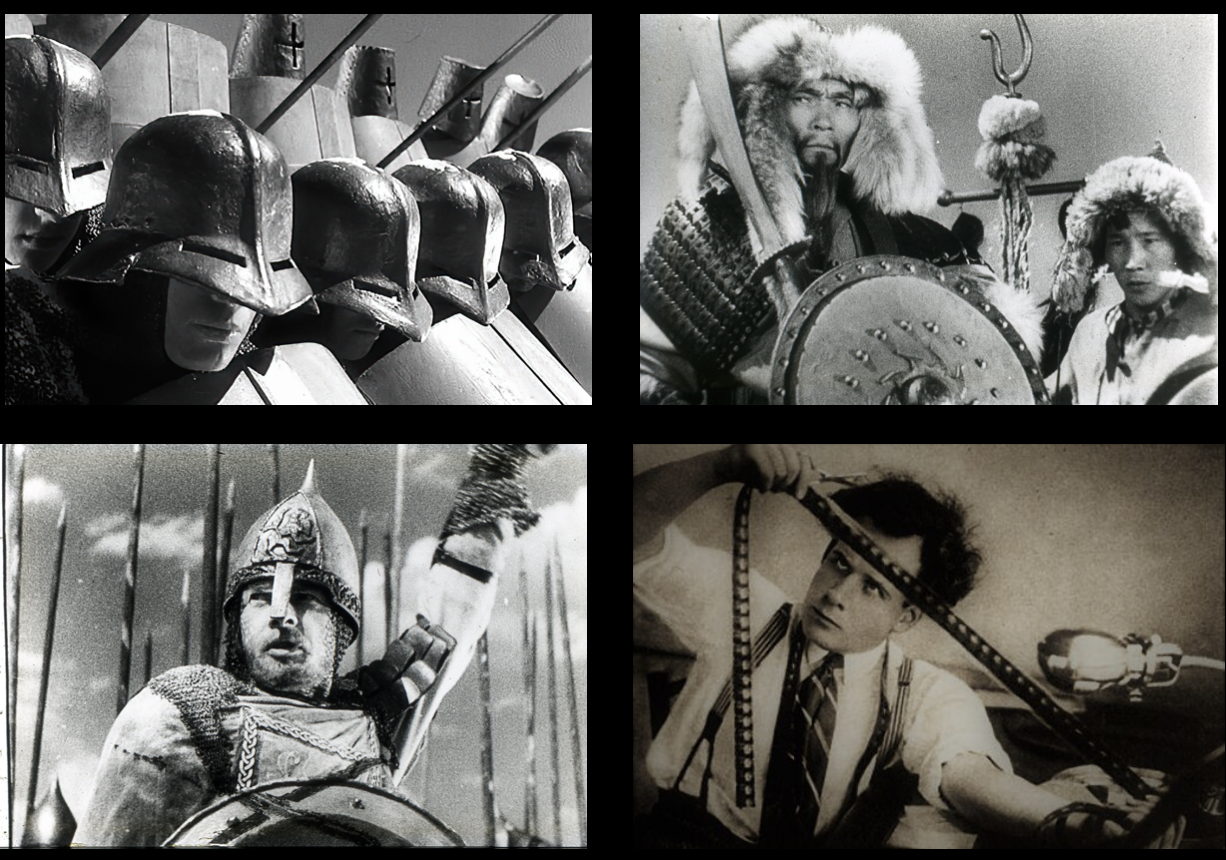
To borrow a concept from Eisenstein, this montage proposes a range of historical connections that take us far beyond familiar maps: from Riga to Rome and Constantinople, from the Baltic to the Mediterranean, and then across Central Asia to Karakorum in a thirteenth-century world system. The geographical extensions also pull us into the deeper sedimentations and rhythms of historical time, which trouble simple chronologies and a uniform narration of the modern nation. It was Federico II, brought up in Palermo and probably knowing Arabic, who, at Rimini in 1226, granted the Teutonic Knights sovereignty over Prussia and authorised the Christianisation of these pagan lands, inaugurating the brutal Northern Crusades. From Islamic Sicily and the Mediterranean to shamanic snake rituals in the pagan Baltic: all of this illustrates the creolising processes of belonging and the fallacy of homogeneous identities.
Decolonisation is not simply about stripping away an existing rule and language and contesting an imposed identity with an alternative one. It is not simply about the return of the native. And who, exactly, is the native in this scenario? Rather, it requires the critical examination of the powers, premises and procedures that permit a particular historical and cultural narrative to impose itself. And it is here that the concept of identity itself vacillates. Setting a stable and known identity, even if subaltern and in revolt, against another, hegemonic one means remaining locked in a vicious and repetitive dialectic forever.
Despite the Romantic myths of the nation’s homogeneous manufacture and its people, it would be difficult to make a serious historical, cultural and political case for each of us embodying stable identities. Culture and language are open-ended processes, always under construction and susceptible to transformation. Both are sustained by the movement of historical relations, which compel us to abandon ideas of identity and the invariably terrible consequences of seeking security in blood and soil.
Right now, we are witnessing the murderous costs of the genocide and ethnic cleansing being perpetrated in the eastern Mediterranean by a colonial regime of European Jewish migrants, imposing the obscene violence of a purported right of return realised through the programmed annihilation of indigenous Palestinians.
In shattering the deadly prison house of identity, migration, perhaps the key to the history of Occidental modernity – from the colonisation of the planet to those arriving today from the multiple souths of the world – teaches us a fundamental lesson about the mobile construction of belonging, which requires continual translation of both where you come from and where you are seeking accommodation.
In the end, the colonial clock unwinds and the compass fails. Histories referenced by North and South, East and West, the West and the Rest, unwind. They become porous, more critical, and potentially more democratic.