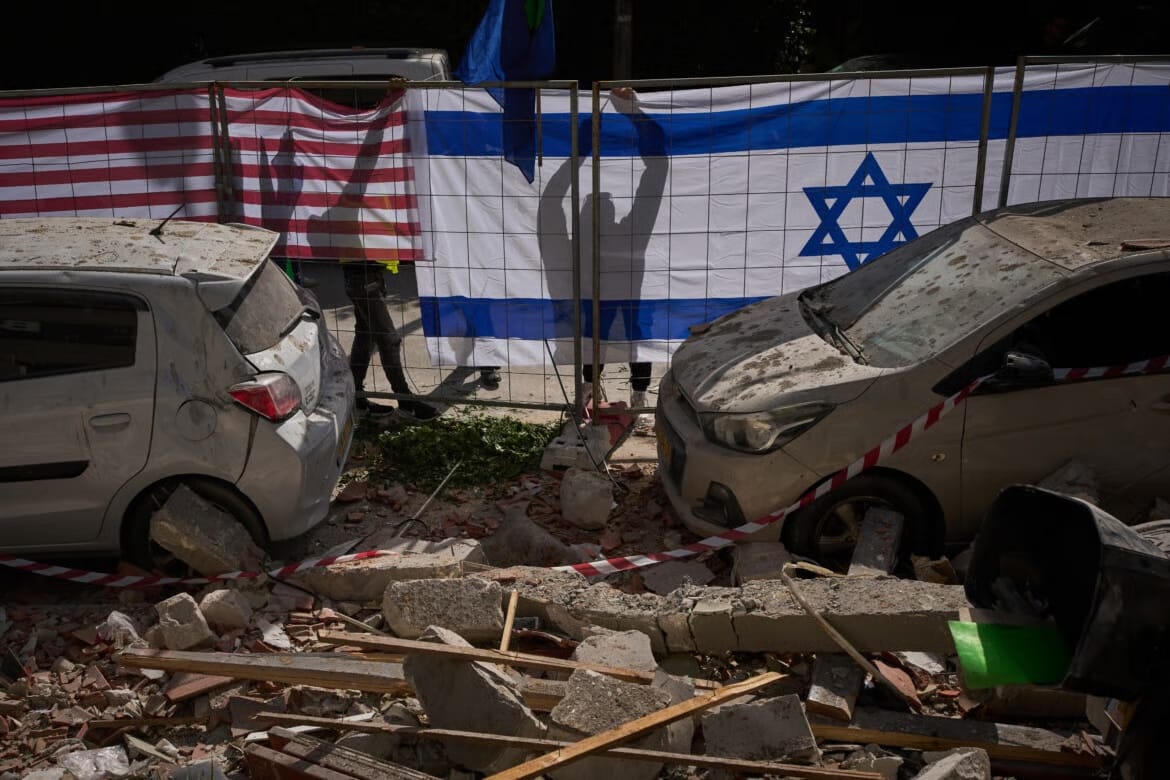
The latest example of the violence of the colonial state of Israel – piracy on the high seas in international waters to seize the boats of the Global Sumud Flotilla seeking, peacefully, to deliver humanitarian aid to Gaza – is not only a cause for moral outrage and civil condemnation. It is also a time for deeper political reckoning. Except for Spain, national governments and the European Union have offered only spluttering rhetorical objections and refused to take any concrete measures. Presented as a cautious diplomatic stance, this is a profound political strategy. Invariably justified in the hollow language of the right to self-defence (from the colonised Palestinians?), and paralysed by guilt over the Holocaust, any public objection to Israel’s murderous actions is immediately condemned as antisemitism. So, Spain is antisemitic, and China is antisemitic. Meanwhile, domestic commentators tie themselves up in moral knots defending the state of Israel, or simply cast aside all pretensions and adopt a messianic calling to affirm Biblical lessons of might-is-right.
For many of us, this script is now exhausted. Despite the repressive violence of Western governments against the public protests insisting that Palestinians have the right to rights, a sea change is underway. Increasing dissent exposes a dwindling democracy and emerging authoritarian rule in the West. The brutality of the police in Berlin or London against those contesting the deadly colonial politics of the Zionist state is only the most visible form of present-day policing of the crisis by the so-called democratic state.
Today, we are witnessing the erosion of democracy in political processes and juridical procedures that are inextricably linked to the genocide in Gaza. In other words, the state of Israel is not the exception we would like to believe it is. It is a laboratory of modernity, not simply in its colonial execution or as a testing ground for weapons and surveillance to be exported, but as a modality of government that the institutions of Western governance, in their indifference and duplicity, have come to accept.
We now live in an Orwellian universe where war is good and peace is bad. As Sandro Mezzadra and Brett Nielsen argue in The Rest and the West, we live under perpetual regimes of war. All underpinned by the structural racialisation of the planet under Occidental rule, where some lives are considered to count far more than others in order to ensure the brutal pursuits of capital.
Israel has, from its very beginning, deployed ethnic cleansing and genocide. In this, it is neither historically nor politically an aberration. It is our history. It is the concentrated synthesis of Western colonialism, its methods and its language, all condensed in the capitalist assault on the rest of the world.
This is fundamentally what Palestine teaches us. Palestine, as the Palestinian writer Adania Shibli has put it, is our teacher. What has been unfolding in the Eastern Mediterranean for several years (in truth, for many decades) has turned our culture and its political justifications upside down and inside out, laying bare an increasingly rotten body. To continue defending Israel, its colonial foundation, its murderous racial project and its ongoing genocidal practices is to defend the West as a bastion of supremacist ideology.
In recent weeks, the Supreme Court of the United States has struck down legislation that will permit the rollback of the achievements of Martin Luther King and the Civil Rights Movements of the 1960s, and will permit the reintroduction of the regime of Jim Crow. Many southern states have immediately moved to implement this possibility. As James Baldwin once put it to his white interlocutor on US television: ‘What are you going to do now? Exterminate us?’
Iain Chambers has been a Cultural, Postcolonial, and Mediterranean studies professor at the University of Naples. At the same university, he has served as the Director of the Centre for Postcolonial Studies and the director of the doctoral program on Cultural and Postcolonial Studies in the Anglophone world. Chambers' work focuses on interdisciplinary and intercultural studies of music and popular and metropolitan cultures. Recently, he has shifted his research towards postcolonial analyses of the modern Mediterranean. Chambers studied with Stuart Hall at the Centre for Contemporary Cultural Studies in Birmingham and has authored several books. Some of his notable works include "Urban Rhythms" (1985), "Migrancy, Culture, Identity" (1994), "Mediterranean Crossings: The Politics of an Interrupted Modernity" (2008), "Popular Culture: The Metropolitan Experience" (2016), "Postcolonial Interruptions, Unauthorised Modernities" (2017), "Location, Borders and Beyond: Thinking with Postcolonial Art" (2018), and La Questione Mediterranea (2019). He has also co-edited books such as The Postcolonial Question: Common Skies, Divided Horizons (1996) and Esercizi di Potere. Gramsci, Said e il postcoloniale (2006) with Lidia Curti.