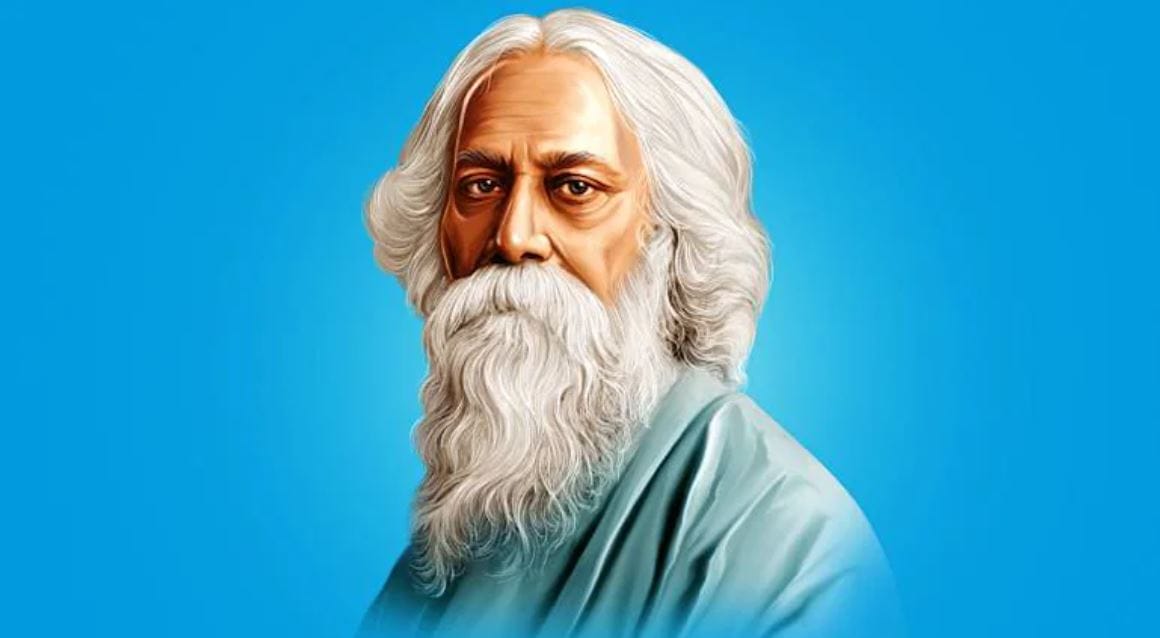
Tagore’s ideas about education, as seen in his story ‘Totakahini,’ continue to resonate with contemporary debates about schooling and the traditional education system. By exploring ‘Totakahini,’ we can better understand Tagore’s vision for education and its relevance to our modern-day educational challenges. So, basically ‘Totakaahini’ is a short story, which was written by Rabindranath Tagore and it was first published in the Bengali magazine ‘Sabuj Patra’ in Magh, 1324 as per the Bengali Calendar (January February, 1918) in its Vol. 4 Issue 10, from Page no. 609 to 613 (divided into seven parts) and later collected in ‘lipikaa’ (‘Brief Writings’) in August 1922. It was also known as ‘The Parrot’s Tale’ or ‘The Parrot’s Training.’
Thomas Babington Macaulay (1800-1859) was a legal member of the council of India. He wrote, “Minutes on Education” in “1835 for Lord William Bentinck, Governor-General of British India” where he made his “advocacy of English language education”. The main aim of his efforts was to find which language was “the best worth knowing” for Indian students. He found English as the best worth knowing language. He proposed English as a medium of education.
On the other hand, Rabindranath believed in “mother tongue as a medium of education”. He wrote many essays, short stories and poems depicting educational scenarios of colonial India and “Tota Kahini” (The Parrot's Tale) was one of the most renowned texts. Tagore was a critic of the Colonial educational policy and as a reader one can find a connection between both “Minutes on Education” and “Tota Kahini”. Hence, the purpose of this write up is to show how Rabindranath Tagore demonstrated "Tota Kahini” as a satire of Macaulay's "Minutes on Education". Rabindranath demonstrated Colonized Knowledge was nothing but a skit in which a parrot with no connection to analytical understanding, no creativity or real knowledge acts out memorized lines. In “Minutes on Education”, Macaulay wanted “intellectual improvement” for the people of the then India. He advocated for English language education. He had “read translations of the most celebrated Arabic and Sanskrit works” but he had “never found one among them worthy of reading" and said “who could deny that a single shelf of a good European library was worth the whole native literature” of India. He thought the native language was “useless” and futile. On the other hand, Rabindranath criticized this western educational plan and wrote “Tota Kahini” as a satire of this. The story was about an “illiterate bird” that “sang songs” but did not read “the scriptures” and “never cared for custom and convention”. Seeing this the King said, “such a bird is of no use; it eats fruits in the Orchard, and the fruit market runs at a loss!”
The parrot was the symbol of the students of India. To show Macaulay's illiterate native Indian, Tagore depicted “the illiterate bird”. The songs of the bird were the symbol of “Indian education” which had no “market value”. Macaulay wanted to withdraw Sanskrit and Arabic, and this is reflected in the king's thought. The King also wanted to withdraw the bird's songs because they had no market value. Macaulay believed that English tongue “would be the most useful” to Indians. He supported his position by saying, “the literature of English” is more "valuable“. He claimed that Russia was civilized by the “language of western Europe”; therefore, India also needed the western language, where he emphasized the study of literature. In “Tota Kahini", the King thought to give some education to the uncivilized bird. He called on his ministers to give “the bird some useful education” like Colonial rulers. Rabindranath emphasized “freedom of thought” and “imagination “in his “Shikker Shonsker(reform of education) as aims of education. He believed that there was no nation who would be creative without freedom of thoughts and imagination. They would lose their power of self-realization and would themselves become like the parrot without the power of self-exploration. Macaulay‟s educational plan did not include scope for self-realization. It only focused on educating the bird in English to run the mundane, daily things. The nephew of the King built the cage for the sake of education and Macaulay built a boundary to circumscribe education in the name of effectiveness. Therefore, the nephew of the King did the same as Macaulay did. He took the responsibility to educate the bird. He discussed with other scholars and “arrived at the conclusion that the nest the bird builds with twinges and straws was too small to hold much learning.” Therefore, it was important to build a “good cage” (a colonial cage). He made lots of arrangements to educate the bird. The King was happy to see the arrangements. But he forgot to see the bird because “the process was so much larger than the bird itself, that the bird was not seen, rather, it was fair enough not to see the bird.”
Tagore pointed out how Macaulay forgot about the people as he thought only of the process which, for Macaulay, who benefited as part of the colonial administration, was “much larger than the people.” The parrot was unable to think in the language of scriptures. So, throughout Macaulay's educational plan, Indian students would memorize the language of English like the parrot. But Macaulay forgot that no one can learn this way, indeed he never planned for Indians to truly learn. Students must have “freedom of thought” and “imagination." Macaulay's educational plan for the students of India left very little space for “freedom of thought” and “imagination”. Like the parrot in the cage the Indian students were isolated. The nephew did this to teach the bird a lesson. In this way, he established his (along with compradors like the nephew) control over the parrot.
For Rabindranath, Colonial education was responsible for creating epistemic violence through cultural imperialism; educating people to try to copy British everything as if parrots repeating phrases. But this education replaced their ability to produce any creative thing. The Parrot lost its freedom of thought as it memorized the scriptures. It forgot how to sing a song. The cage created an alien circumstance for the Parrot. Likewise, Macaulay's educational plan also created these alien circumstances for Indian students. Memorization of western values siphoned from English literature was also an alienated experience for Indian students. Therefore, if Indian students imported English values and morals without knowing the experience, they turned themselves into parrots. Rabindranath did not consider this education. For him, self-realization in order to establish a well-balanced relation with others remained absent, at best nebulous.
Macaulay believed in the superiority of the English language. He said that English was superior because of “the Poetry of Milton”, “the Metaphysics of Locke” and “the Physics of Newton”. Therefore, English was “better to know than Sanskrit or Arabic”. Finally, he wanted to create a class who would be “Indian in blood and color, but English in taste, in opinions, in morals, and in intellect” This class would help them to educate other natives. He wrote, “To that class we may leave it to refine the vernacular dialects of the country, to enrich those dialects with terms of science borrowed from the western nomenclature, and to render them by degrees vehicles for conveying knowledge to the great mass of the population”. Tagore criticized the idea of creating this class. In “Tota Kahini”, the policeman, the royal relatives and the nephew of the King were the symbols of the English speaking class. They were not helpful for the native. They upheld the hegemony of the ruling class. The policeman said that the bird was very “indisciplined”. The Royal relatives claimed that the birds of the country were not only “indisciplined” but also they were “ungrateful”. No one noticed the dead body of the bird. Everyone was critical of the uncivilized bird. The nephew declared that the education of the bird was complete. They identified the dead body of the parrot as an educated parrot. “The bird was brought. Along with the bird came the Police chief, the sentry, the horseman. The king pressed on the bird, it did not open its mouth, and it did not make any sound. Only dry paper from the books rustled in its belly.” The nephew of the King was responsible for the death of the parrot. Similarly, the new class with English values would do the same. They were not able to understand the importance of parrot's songs. They were “blind followers‟ of the ruling class. On the other hand, the parrot did not understand the meaning of Scripture. Therefore, the scriptures were depicted as a “dry paper from the books”. However, the poetry of Milton, which was superior for the English, seemed to be only a “dry paper from books” for Indian students. All of this proves that Rabindranath was a critic of the Colonial educational plan. As a reader, we can see how “Tota Kahini” is a satire of Macaulay's educational plan. In Discipline and Punish, Michel Foucault gave the idea of prison, which was present in “Tota Kahini”. Authority wants to control the body and the mind to balance its power. The parrot was controlled by the King in the name of education. Likewise, Macaulay’s educational plan would also build a prison, only in a different manner, in the name of education. Through Macaulay’s educational plan, Britain would establish its control over India. His idea of the class would create division among the native people. The nephew of the King did not understand what would be considered as a useful education for the parrot. He made the wrong decision because of his lack of organic thought. The British Raj also called Indians mostly uncivilized and Macaulay agreed.
In contrast, Rabindranath Tagore was critical of Macaulay’s plan. Education becomes a technology of colonial subjectification in two other important and intrinsically interwoven ways; it establishes locally, English or British as normative through critical claims to the 'universality' of the values embodied in English literary texts, and it represents the colonized to themselves as inherently inferior beings – “wild, barbarous, and uncivilized‟. The article ‘Mismatch of Education (Siksar Herpher’) written in 1892 eloquently pleaded for a system of education conducted in congenial surroundings and in a manner supercharged with the spirit of joy. The article reasoned that the ultimate aim of education should be the all-round development of an individual for harmonious adjustment to reality. It advocated the value and need of the mother tongue in providing all the necessary educational nourishment of the child. Here Tagore made an intense critique of the colonial pattern of education. Based on his own experience of schooling during childhood and his observations in later life, he saw the system instituted by the British government as an incompetent imitation of the English model which educated only a few and inadequately at that. Tagore’s search was for an alternative to the colonial pattern of education, which was only making clerks and unthinking individuals and killing children’s agency and turning them into passive conformists.
Tagore’s philosophy and practice of pedagogic reform sought to “decolonize education” in British colonial India. In terms of curriculum, he advocated a different emphasis in teaching. Rather than studying national cultures for the wars won and cultural dominance imposed, he advocated a teaching system that analysed history and culture for the progress that had been made in breaking down social and religious barriers. Such an approach emphasized the innovations that had been made in integrating individuals of diverse backgrounds into a larger framework, and in devising the economic policies which emphasized social justice and narrowed the gap between rich and poor. Art would be studied for its role in furthering the aesthetic imagination and expressing universal themes. In Tagore’s philosophy of education, the aesthetic development of the senses was as important as the intellectual–if not more so–and music, literature, art, dance and drama were given great prominence in the daily life of the school. Tagore was a fierce critic of the prevailing colonial school system, which he described as a "manufactory" designed to "grind out uniform results" and produce compliant clerks and factory workers. He believed this system stifled creativity, independent thinking, and a child's natural connection to nature and life.
‘We felt we would try to test everything,’ he writes, ‘and no achievement seemed impossible…We wrote, we sang, we acted, we poured ourselves out on every side.’ (Rabindranath, My Reminiscences 1917: 141)
Tagore’s educational efforts were ground-breaking in many areas. He was one of the first in India to argue for a humane educational system that was in touch with the environment and aimed at overall development of the personality, instead of only marks and degrees. It should be noted that Rabindranath in his own person was a living icon of the type of mutuality and creative exchange that he advocated. His vision of culture was not a static one, but one that advocated new cultural fusions, and he fought for a world where multiple voices were encouraged to interact with one another and to reconcile differences within an overriding commitment to peace and mutual interconnectedness.
Tagore was the first theorist in India to consider children as active thinkers with agency over their own lives. He believed in children’s capability and imagination and presented his views for Children’s autonomy and freedom and creative faculty through the necessity of imagination. His dream for children provided a scathing critique of the education system of Colonial India, some of which is still applicable, particularly insofar as today’s system does not allow for the spontaneous development by children. He suggested, "Since childhood, instead of putting the entire burden on the memory, the power of thinking, and the power of imagination should also be given opportunities for free exercise" (Rabindranath , Shikshar Herpher [Mismatch of Education]). In a nutshell, in Tagore’s philosophy of education, the aesthetic development of the senses is as important as the intellectual–if not more so–and music, literature, art, dance and drama were given great prominence in the daily life of the school. He believed ‘Our University must not only instruct, but live; not only think, but produce. "The highest education is that which does not merely give us information but makes our life in harmony with all existence".
References:
Macaulay's Minute on Education, February 2, 1835, https://home.iitk.ac.in/~hcverma/Article/Macaulay-Minutes.pdf
The Parrot's Tale by Rabindranath Tagore https://www.teachingenglish.org.uk/sites/teacheng/files/Tagore_The%20Parrot.pdf (Totakahini story published in Sabuj Patra, 1918 (Page 612 – 613, Part 6 – 7) Source: Sabuja Patra, Vol. 4, Issue No. 10 (1918).
My School by Rabindranath Tagore Lecture delivered in America; published in Personality London: MacMillan, 1933. https://schoolofeducators.com/wp-content/uploads/2011/12/03.pdf
"Siksar Herpher" ("Our Education and its Incongruities") Written in 1892
"To Teachers" A lecture delivered in China in 1924, where he criticized the "education factory" and advocated for an education that embraces human unity over narrow nationalism. https://indiachinainstitute.org/wp-content/uploads/2009/07/tagore-talks-in-china-81-99-121-125-132-135.pdf
Prof. (Dr.) Bula Bhadra, is currently a Professor Emeritus and the Director of Centre of Interdisciplinary Studies and Research at Sister Nivedita University, New Town, Kolkata. She is an alumnus of Presidency College and University of Calcutta and did her M.A. & PhD in Sociology from McMaster University, Canada where she taught for three years as Assistant Professor. She taught for 28 years in the Dept. of Sociology at University of Calcutta. She has been a Visiting Professor in many places, IIM, JOKA, W Bengal, in the Dept. of Humanities & Social Sciences, Indian Institute Engineering, Science and Technology, Shibpur, West Bengal, Federal University of Rio de Janeiro, Brazil, University of Ohio, USA, to name a few. She is the recipient of “Professor D. N. Mazumdar Memorial Gold Medal as Distinguished Social Scientist” by Indian Social Science Association in 2017. She was an elected member of managing committee of Indian Sociological Society from 2001-06 and also has been the Regional representative & Board Member of Research Committee (RC) 32 (2014-2018 &2018-23) on Gender, Women and Society and RC 53 on Sociology of Childhood (2014-23) as Secretary and Treasurer (2018-2023) of International Sociological Association. She has published extensively on Gender and Childhood, Gender and Technology, Decolonization of knowledge nationally and internationally. She is a Scholar-activist and combines her academic activities with grass-roots work and has been a key resource in an enormous number of trainings on Gender sensitization, Human Rights, Parenting, Child Rights & Protection and Police Training for Central Government, different State Governments and NGOs and Refresher Courses of UGC (HRDC).